Holocaust Study Tour
Study Tour in the Footsteps of Dawid Rubinowicz
Study Tour in the Footsteps of Dawid Rubinowicz | Podróże studyjne | En resa i Dawid Rubinowicz fotspår

The Diary of Dawid Rubinowicz—Pamiętnik Dawida Rubinowicza—is one of the most touching testimonies of the fate of Jewish children during the Holocaust. Writing down his thoughts, fears and observations in short and direct notes in five ordinary school exercise books, 13-year-old Dawid Rubinowicz gives an insight into the time of the Nazi occupation of Poland and the world of a Jewish boy and his family in the time of the open ghetto of Bodzentyn.
You are welcome to use the study tour description as inspiration and build upon it with your ideas. If you would like to have more information about the study tour, maps or guidance, please feel free to contact us!
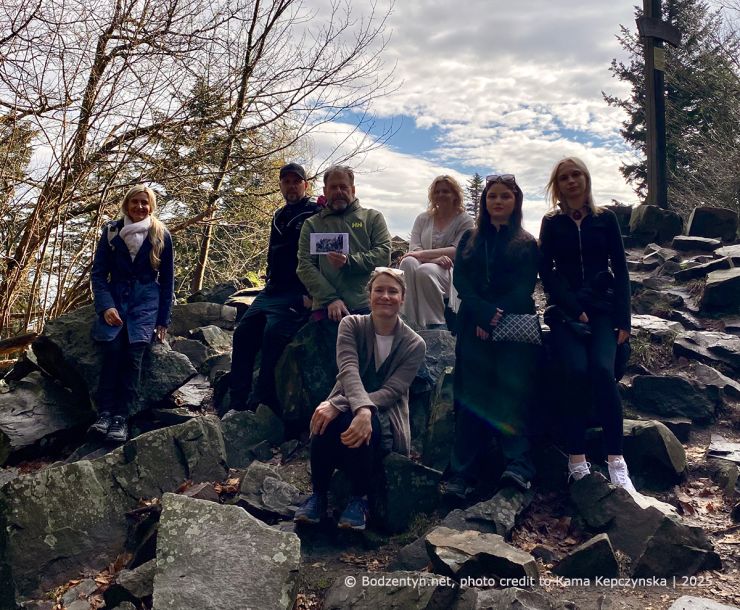
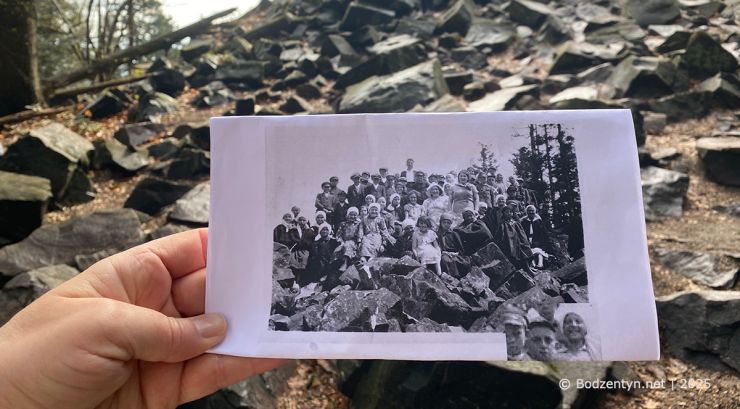
In a photo from 1937, Dawid Rubinowicz can be seen on a school outing to the top of Łysica Mountain. As part of the study tour in Dawid's footsteps, the group went uphill to the location.
Background: Dawid tells the story of the Holocaust from a child's perspective from a rural village in Poland. From the diary he kept in school notebooks in the years 1940–1942, we learn about the persecution, restrictions, and forced relocation that Dawid and the Jewish population were subject to in Bodzentyn, Krajno and other satellite villages. We know from archival materials and testimonies that in the autumn of 1942, the Jews in the open ghetto of Bodzentyn were gathered in the lower square of the town and taken to the train station in Suchedniów. From there, the train departed for the Treblinka death camp.
This study tour follows in Dawid's footsteps. The structure of the trip, including learning objectives, teaching, and exercises, has been created by the educators based on their knowledge and experience of the subject, as well as their familiarity with remembrance trips. The approach takes into account advice from the International Holocaust Remembrance Alliance (IHRA) and Living History Forum.
The overall aim of the study tour is to increase participants' understanding of the Holocaust – the systematically organised, state-sponsored genocide of around six million European Jewish men, women and children carried out by Nazi Germany and its collaborators during World War II. The participants will examine the role of antisemitism in Nazi ideology and trace its manifestations across different phases of the Holocaust, and additionally, how antisemitism led the Nazis to target Jewish people. Additionally, the study tour aims to increase participants' understanding of how the Holocaust affected individuals and families, but also societies and cultures. All of this is done by:
A) Giving participants time
- to learn about Jewish life in Poland, which the Holocaust destroyed;
- to understand the steps leading up to the Holocaust and how persecutions and mass murders were planned and carried out, as well as the consequences of this.
B) Using methods that promote critical thinking and reflection. We also utilise well-selected primary and secondary sources that are suitable for the target group and the theme of the trip, with Dawid Rubinowicz's diary at the forefront.
C) Highlighting the historical individuals and their actions, the complex historical context, and providing time for discussions and personal reflection on the individual and collective responsibility for fellow human beings.
Before the study tour, the participants engaged in preparatory activities that enabled them to describe key aspects of World War II, explain the core tenets of Nazi ideology and antisemitism, and get a sense of the historical context and themes of Dawid Rubinowicz’s diary.
During the journey, questions were posted on a shared Google Classroom platform on most days. These prompts aimed to guide participants in describing their experiences and learning from the day, while also providing space for personal reflection and introspection.
As part of the assessment tool for evaluating the journey and its learning outcomes, participants created mental maps both before and after the study tour. Educators then compared these maps to assess development. The comparison demonstrated that participants had gained a deeper understanding of the Holocaust. For example, they showed an in-depth grasp of the processes that led to genocide and how it was systematically organised and executed. They also developed knowledge of resistance efforts, the far-reaching consequences of the destruction of Jewish communities, and the vital importance of preserving historical memory. After the journey, participants expressed more nuanced perspectives on both perpetrators and victims, along with heightened awareness of how antisemitism led the Nazis to target Jewish people.
The post-tour reflection was facilitated by participants holding group presentations to peers at school.
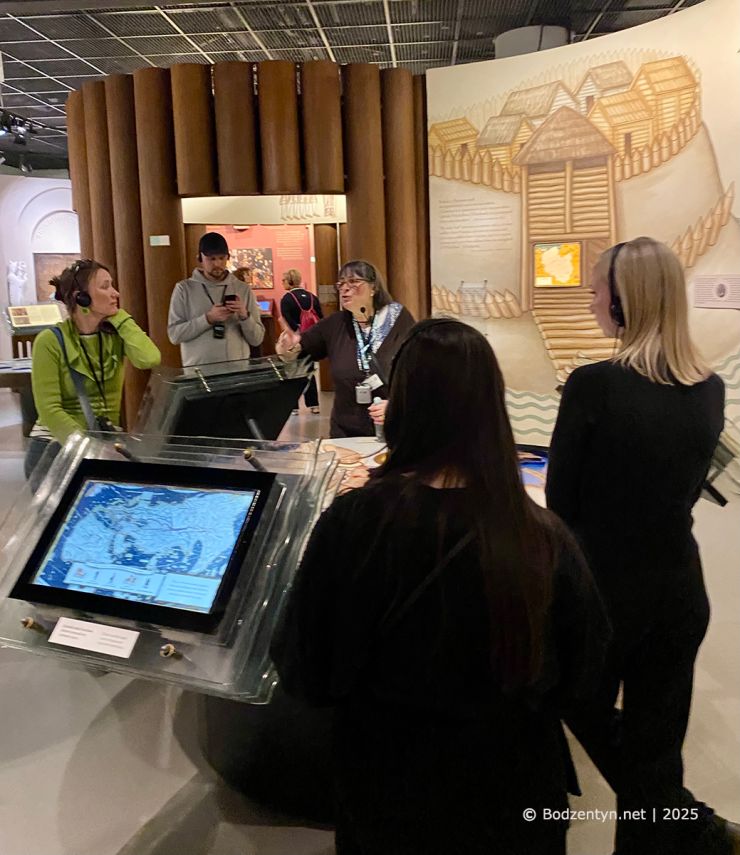
Day 1: At the Polin Museum in Warsaw, participants learn about Jewish life in Polish towns and villages up to the time of WWII and through the Holocaust. In the Core Exhibition, titled "1000-Year History of Polish Jews," the participants discover the everyday customs and traditions of the people who lived through these periods. It also highlights the significant contributions made by Jews to the development of Polish culture, science, and economy.
Learning outcomes: Participants should be able to describe some aspects of Jewish customs, traditions, and religious life.
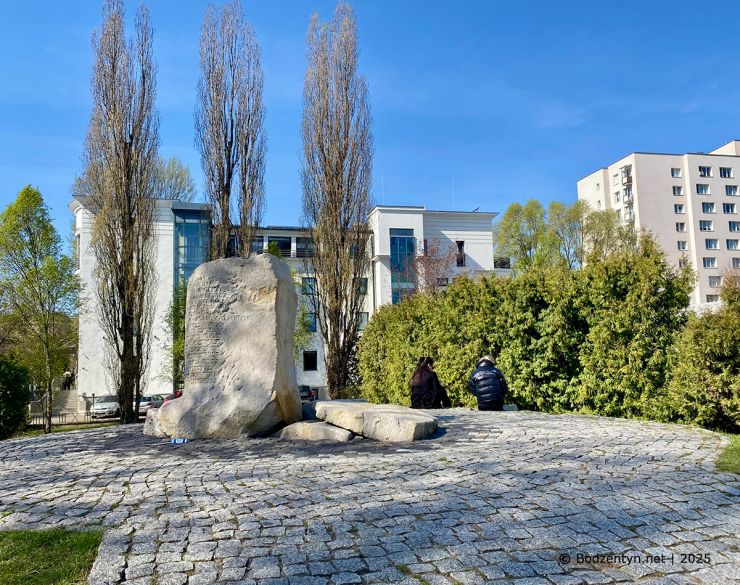
Day 2, Part 1: The participants learn about the resistance in the ghetto and about Irena Sendler, who saved the lives of more than 2,000 Jewish children in the Warsaw ghetto.
After the session, in a private moment, the participants get some time for reflection (in this study tour, the educator asked them to make a list of things they are grateful for).
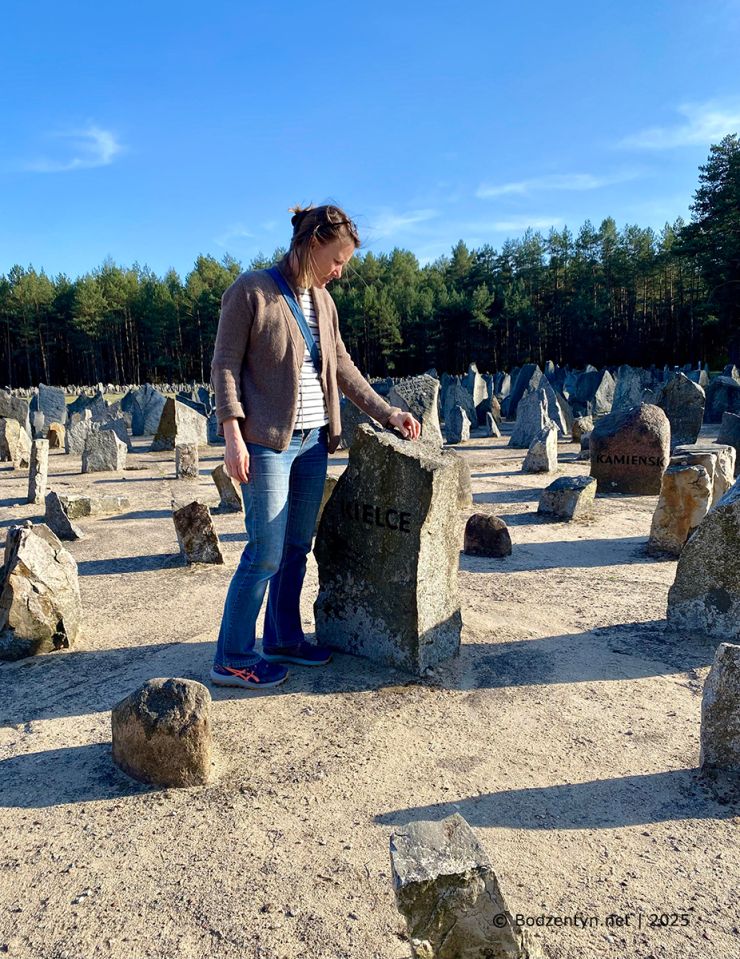
Day 2, Part 2: The participants visit physical sites connected to the Holocaust, as the underground bunkers in Warsaw and the Umschlagplatz, from where the Jews in the ghetto were deported to Treblinka. They get a sense of time and space. Visiting the death camp, the participants gain a historical understanding of the systematic organisation of the mass murder of Jews in Europe.
At the memorial site, we read personal stories and pay our respects to the memory of the victims from Kielce and Bodzentyn. Throughout the trip, the purpose of sharing personal stories is to give participants individual perspectives on events and experiences. Another learning objective is to develop their empathetic abilities. Additionally, participants gain insight into the value of remembrance and the importance of preserving historical sites.
Learning outcomes: The participants should be able to engage in discussions on the careful planning laid out by the Nazis at the Wannsee Conference in January 1942, and how the mass murder was implemented, as well as reflect upon the Holocaust in terms of memory and remembrance.
Day 3, Part 1: The participants watch the educational version of the documentary, which tells the story of the Oyneg Shabes archive, created by a clandestine group in the Warsaw Ghetto. They learn about the people who vowed to defeat Nazi lies and propaganda by detailing life in the ghetto from a Jewish perspective. Participants gain an understanding of the importance of “who writes the story”.
Learning outcomes: Participants should be able to connect information about the Ringelblum Archive and the importance of preserving archival materials studied in connection with the study tour in the footsteps of Dawid Rubinowicz.
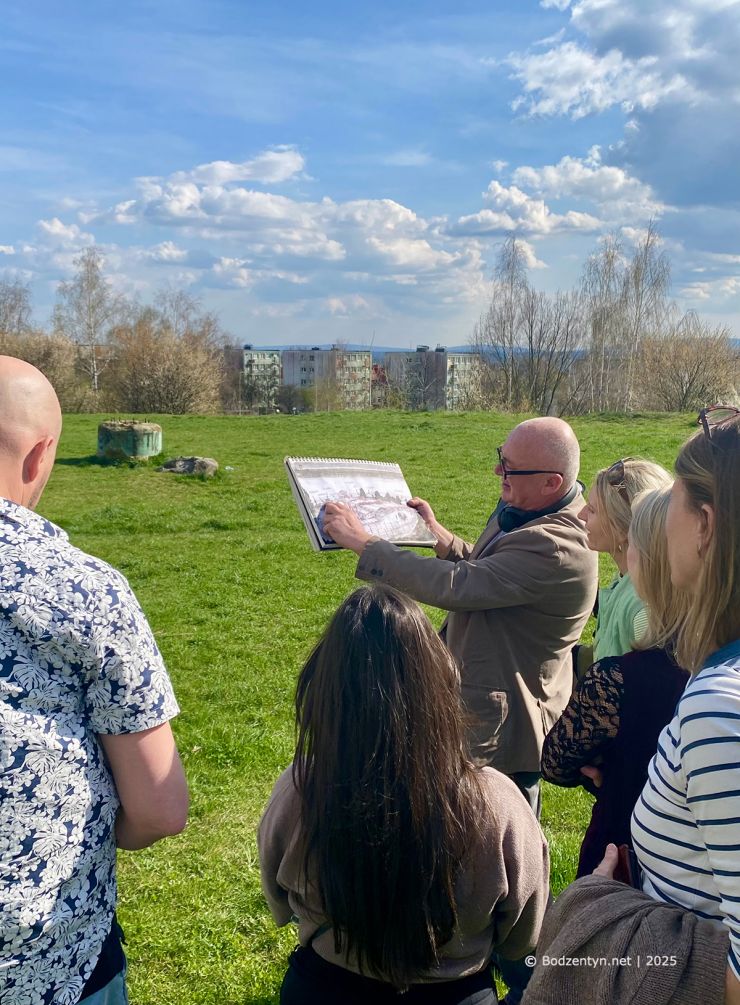
Day 3, Part 2: The participants visit the former barracks camp Majówka in Starachowice and learn about the daily struggles for survival within the camp. We present the dilemma of four young Jewish men who managed to escape from the camp: Alter, Moniek, Avram and Dawid. We also learn about Nazi ideology and antisemitism at the Jan Karski institute. Participants are encouraged to reflect on the moral and challenging questions that the studies raise and their relevance to our current times.
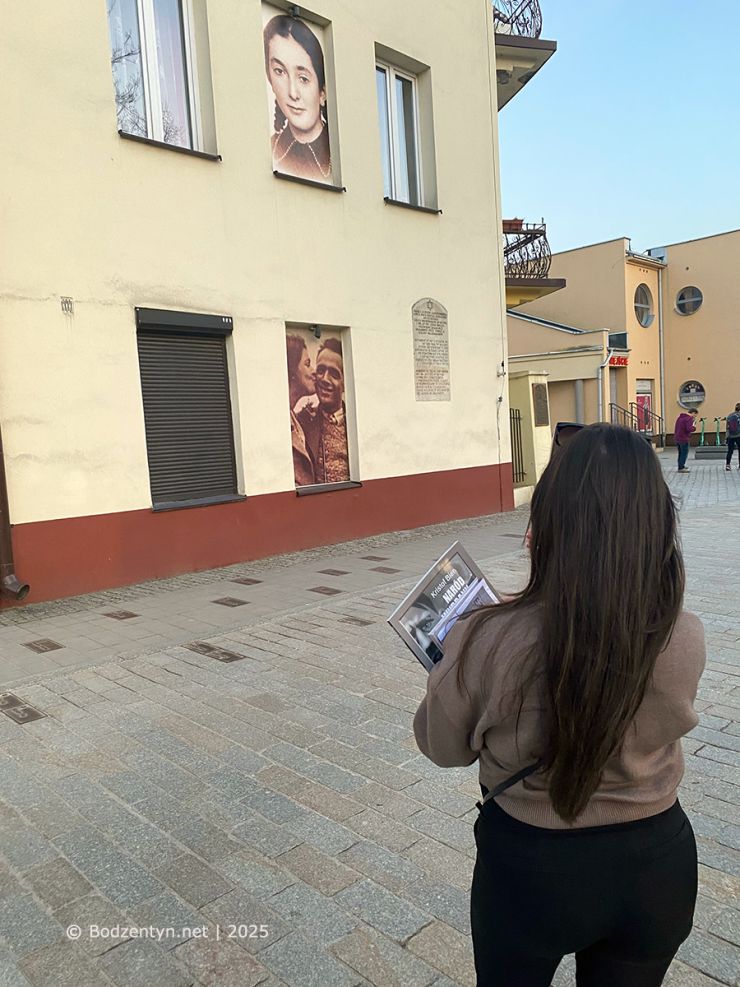
Learning outcomes: Participants should be able to reflect on how antisemitism led the Nazis to target Jewish people and to carry out the Holocaust.
They should show an increased awareness of thinking critically and from multiple perspectives, as well as being able to reflect on what hatred and intolerance may lead to.
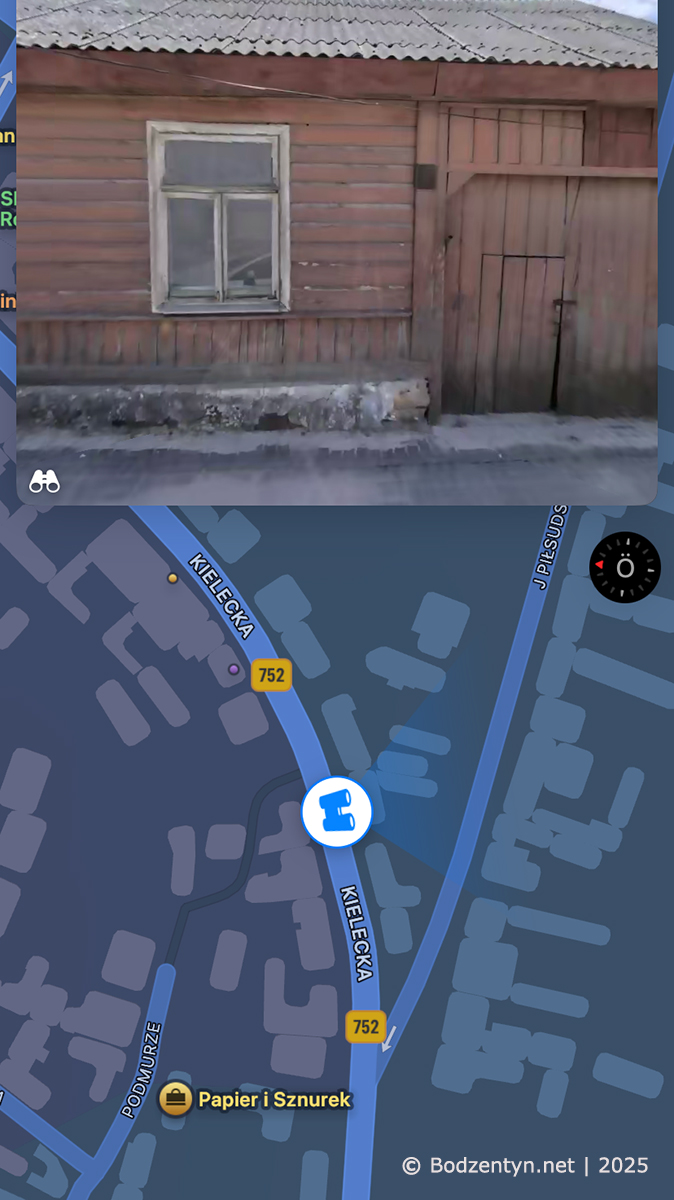
Day 4: Participants learn about the Jewish communities of Krajno and Bodzentyn before and during the Nazi German occupation through personal stories, Dawid Rubinowicz's diary, and archival materials. They are presented with dilemmas linked to people in the region, such as Goldie Szachter Kalib and the Zygadlewisz family. The participants take part in a workshop in which they gain further insights into propaganda, Nazi ideology, and reflect on what intolerance may lead to. The participants take part in a workshop that offers a nuanced perspective on perpetrators, bystanders, rescuers, and victims.
Learning outcomes: Participants should have gained a basic understanding of how Jewish life was organised and have a physical experience of the sites.
Participants are encouraged to reflect on moral, political and complex issues and their relevance to our time. Participants should demonstrate an increased awareness of thinking critically and from multiple perspectives.
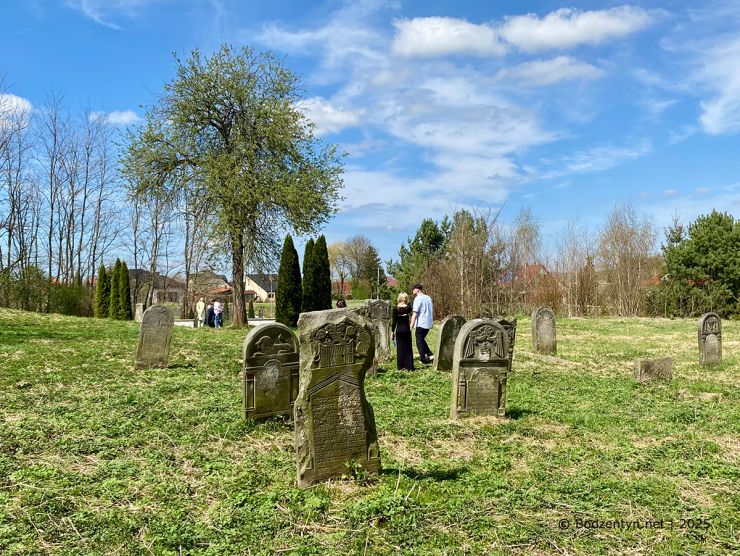
Day 5: The participants visit Łysica Mountain, where, in 1937, Dawid Rubinowicz's outing to the top with his school was immortalised in a photo. Here, in the forest, we also continue to tell the story about the four young Jewish men who fled from the slave labour camp and hid in bunkers. We pay our respects to the Dziuba family at the Catholic burial site, who were instrumental in the men's survival. We also pay our respect to one of the men, Avram Cislowski, who is buried in an unmarked grave in the Jewish cemetery. We light a candle and remind ourselves of Max Safir's ambitions, as well as the locals' efforts to preserve the site.
Learning outcomes: The participants should begin to reflect on the implications of the loss of Jewish communities in Poland and elsewhere in Europe, and the need and importance of preserving their memory.
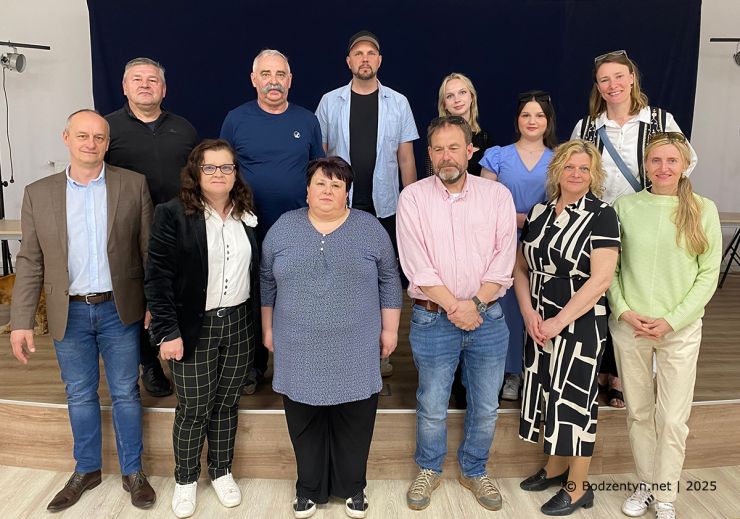
At the end of the trip, the municipality leaders cordially invited the group of visitors to a special meeting with Commissar Anna Leżańska and Deputy Mayor Paweł Wikło, Father Leszek Sikorski, Michal Rachtan, who represents the local Bodzentyn Friends Association, and historian Ewa Kołomańska.
Thoughts, considerations and hot tips from the study tour group:
- It would be helpful to decide on some aspects to focus on with the guide at the Polin Museum, to avoid overwhelming the students.
- For younger participants (lower secondary school), it may be helpful to spend more time in Starachowice and learn about pre-war Jewish life as well as about the ghetto and slave labour factories. Study tips: Dear Sir, Please Let Me Live: A Survivor's Testimony by Max Safir with Ewa Wymark; The Last Selection: A Child's Journey Through the Holocaust by Goldie Szachter Kalib, with Sylvan Kalib and Ken Wachsberger; Remembering Survival: Inside a Nazi Slave-Labor Camp by Christopher R Browning.
- At the foot of Łysica mountain in Krajno, it would be worth learning about the Polish resistance and the locals whom the Nazis murdered in the area.
- For younger participants (in lower secondary school), it may be helpful to conclude the journey by visiting Auschwitz-Birkenau as well.
- It is essential to involve participants in personal stories and fates. These can also be utilised for discussing various dilemmas. Students can even be asked to retell some of the stories to each other. For younger participants, it may be more effective not to reveal the whole story about a person, but instead let them discover it at the end of the journey.
- Explore how writing can play a more significant role in the participants' reflections.
Strong features from an educational point of view and ideas for improvement by Norbert Mongyi, formerly adviser for the learning paths and formerly affiliated with the Zachor Foundation for Social Remembrance in Hungary, currently works as an assistant lecturer and a high-school teacher in Budapest:
- Contextual and Interdisciplinary Preparation: The program includes thoughtfully designed pre-visit sessions that provide historical context on World War II, Nazi ideology, antisemitism, and an introduction to Dawid Rubinowicz’s diary. This aligns with established best practices in Holocaust education by fostering perspective-taking, building historical empathy, and establishing an emotional framework for the experience. This approach is highly commendable.
- Deep Emotional and Place-Based Learning: By visiting local sites connected to Rubinowicz’s life, participants engage directly with the physical and emotional geography of the past. This place-based approach transforms abstract historical facts into tangible, emotionally resonant experiences that encourage personal reflection and moral engagement.
- Use of Primary Sources and Local Narratives: Incorporating diaries, eyewitness testimonies, and local stories allows participants to connect with authentic voices from the past. This not only humanises history but also promotes empathy and strengthens critical thinking by encouraging learners to interpret diverse, real-life perspectives.
- Active Learner Participation: The program emphasises active engagement over passive observation. Through structured activities and reflective practices, participants deepen their understanding by analysing, interpreting, and emotionally processing the material, leading to more meaningful and lasting learning outcomes.
- Community Engagement and Cultural Exchange: Involving local communities and cultural events situates Holocaust memory within a living, dynamic heritage. This not only enhances the program’s relevance but also fosters intergenerational dialogue and cultural sensitivity, thereby enriching the learning experience.
- Ideas for improvement: The program would benefit from the inclusion of more structured debriefing sessions following emotionally intense experiences. Drawing on best-practice pedagogical approaches, the use of reflective frameworks—such as Gibbs’ Reflective Cycle—can support participants in processing their emotions in a constructive and meaningful way. Additionally, the integration of follow-up activities could be further encouraged. Post-tour reflection formats such as personal journals, group presentations, or community-based projects can help consolidate learning and foster the application of newly gained insights in both individual and civic contexts.
Podróże studyjne
Study Tour in the Footsteps of Dawid Rubinowicz | Podróże studyjne | En resa i Dawid Rubinowicz fotspår
W dniach 12–16 kwietnia 2025 czterech pedagogów i dwóch uczniów ze Szwecji udało się do Polski, aby podążać śladami Dawida Rubinowicza: Ewa Wymark i Anna Larsson z Södra Vätterbygdens folkhögskola w Jönköping, Mathias Ewaldsson — dyrektor szkoły z Borlänge, doświadczony przewodnik w ramach Hågkomstresor i wieloletni uczestnik projektów dotyczących tolerancji, oraz Mikael Enoksson — nauczyciel z Örebro i również doświadczony przewodnik wycieczek do miejsc pamięci, współtwórca wielu materiałów edukacyjnych dotyczących ocalałych z Holokaustu. W podróży brała również udział dr Agata Wicenciak-Szulc, wykładowca języka szwedzkiego na Uniwersytecie Adama Mickiewicza w Poznaniu, która wspólnie z pedagog i koordynatorką projektu Ewą Wymark przygotowała nowe tłumaczenie dziennika Dawida Rubinowicza na język szwedzki — publikacja planowana jest na ten rok.
Podczas podróży grupa odwiedziła Muzeum Polin w Warszawie, Archiwum Ringelbluma, pomniki znajdujące się w Treblince, które upamiętniają Żydów zamordowanych w Kielcach i Bodzentynie, dawny obóz Majówka w Starachowicach, Towarzystwo im. Jana Karskiego w Kielcach, górę Łysicę w Krajnie — miejsce wycieczki Dawida Rubinowicza, widoczne również na zdjęciu klasowym z 1937 roku.
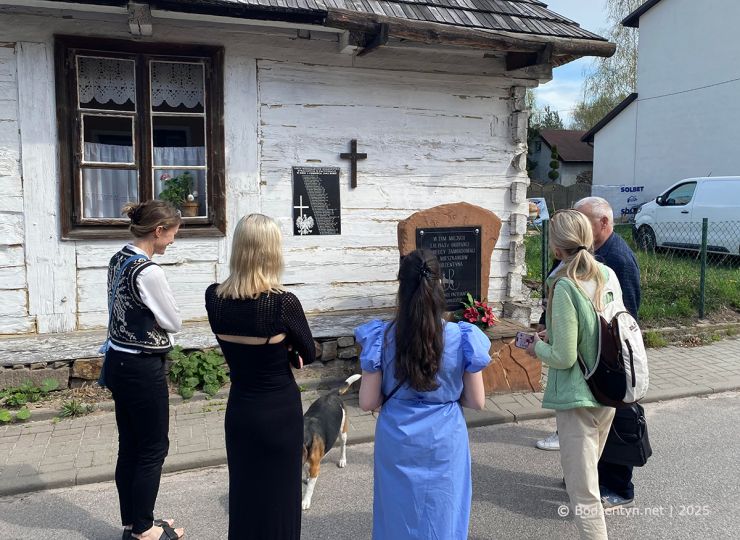
W Bodzentynie grupę powitali Michał Rachtan z Towarzystwa Przyjaciół Bodzentyna, historyk Ewa Kołomańska oraz ksiądz Leszek Sikorski w miejscu pacyfikacji z 1 czerwca 1943 roku, przy domu Czernikiewiczów. Wspólnie uczciliśmy pamięć rodziny Dziubów, która podczas II wojny światowej uratowała troje młodych Żydów, dając im schronienie i żywność zimą 1943/44 i 1944/45 roku. Jednym z ocalonych był Morris Grosman, którego wnuk Shane Grosman odwiedził Bodzentyn w 2023 roku.
Delegacja ze Szwecji została również zaproszona na poczęstunek przez władze gminy — komisarz Annę Leżańską i pełniącego obowiązki burmistrza Pawła Wikło. Spotkanie to zaowocowało rozmowami o dalszej współpracy w zakresie zachowania żydowskiego cmentarza.
Podróż przebiegała śladami Dawida Rubinowicza, ze studiowaniem jego dziennika oraz historii społeczności żydowskiej w Kielcach, Krajnie, ale przede wszystkim w Bodzentynie. Po powrocie grupa przygotuje przewodnik podróżniczy, z którego będą mogli korzystać inni nauczyciele — z pomysłami i wskazówkami, jak zorganizować podobne wyjazdy do tego regionu. Podróż mogła dojść do skutku dzięki wsparciu Fundacji Helge Ax:son Johnsona, szkoły Södra Vätterbygdens folkhögskola, Towarzystwa na rzecz Popierania Nauczania Ludowego oraz prywatnym środkom uczestników.
En resa i Dawid Rubinowicz fotspår
Study Tour in the Footsteps of Dawid Rubinowicz | Podróże studyjne | En resa i Dawid Rubinowicz fotspår
Nedan ges en kort beskrivning av resan i Dawid Rubinowicz fotspår. I presentationen på engelska (ovan) kan du läsa om upplägget med syfte och lärandemål. Välkommen att höra av dig om du som pedagog eller organisatör vill ta del av materialet på svenska.
Den 12–16 april 2025 reste fyra pedagoger och två studerande från Sverige till Polen för att följa spåren av Dawid Rubinowicz: Ewa Wymark och Anna Larsson från Södra Vätterbygdens folkhögskola i Jönköping, Mathias Ewaldsson som är rektor från Borlänge, en erfaren guide vid Hågkomstresor och som har arbetat i många år med toleransprojekt, samt Mikael Enoksson, lärare i Örebro och erfaren guide vid Hågkomstresor och medverkande till flera utbildningsmaterial om överlevande från Förintelsen. Med på resan fanns även Dr Agata Wicenciak-Szulc svensklärare vid Adam Mickiewicz University i Poznań, som tillsammans med läraren och projektledaren Wymark gjort en nyöversättning av Dawid Rubinowicz dagbok (under publicering på bokförlaget Korpen i januari 2026).
Resan följde i Dawid Rubinowicz fotspår med studier av dagboken och den judiska befolkningens historia i Kielce och Krajno men framför allt i Bodzentyn.
Under resan besökte gruppen Polin-museet i Warszawa, Ringelblumarkivet, minnesmonumenten för Kielce och Bodzentyn i Treblinka, före detta baracklägret Majówka i Starachowice, Jan Karski Society i Kielce, och Łysica-berget i Krajno där Dawid Rubinowicz var på utflykt och syns i ett skolfoto från 1937.
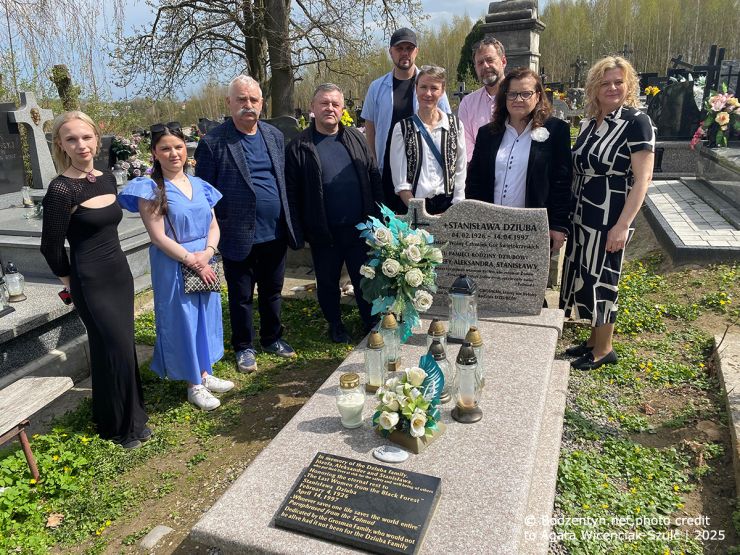
I Bodzentyn välkomnades gruppen av Michał Rachtan från Towarzystwem Przyjaciół Bodzentyna, historikern Ewa Kołomańska och Fader Leszek Sikorski vid platsen för pacifikationen 1 juni 1943, vid Czernikiewicz hus. Tillsammans hedrade vi minnet av familjen Dziuba som räddade tre judiska ungdomar under andra världskriget genom att de gav dem mat och skydd under vintern 1943/44 och 1944/45. En av dem var Morris Grosman, vars barnbarn Shane Grosman besökte Bodzentyn 2023.
Resan kunde genomföras tack vare bidrag från Helge Ax:son Johnsons stiftelse, Södra Vätterbygdens folkhögskola och Sällskapet för folkundervisningens befrämjande, samt med privata medel.
©